On October 22, 2024, a wondrous picture book for Tove Jansson fans will see daylight thanks to a Canadian author and illustrator Lauren Soloy and Tundra Books. “Tove and the Island with no Address” is an inspiring story of little Tove and her family spending their summers on an island in the Baltic Sea. A story set in the wilderness, of being encircled by the sea, a story of a curious kid, her bravery and imagination. “The world is full of great and wonderful things for those who are ready for them,” says Moominpappa in the introductory quote of the book, borrowed from Tove’s “Moominpappa at Sea”.
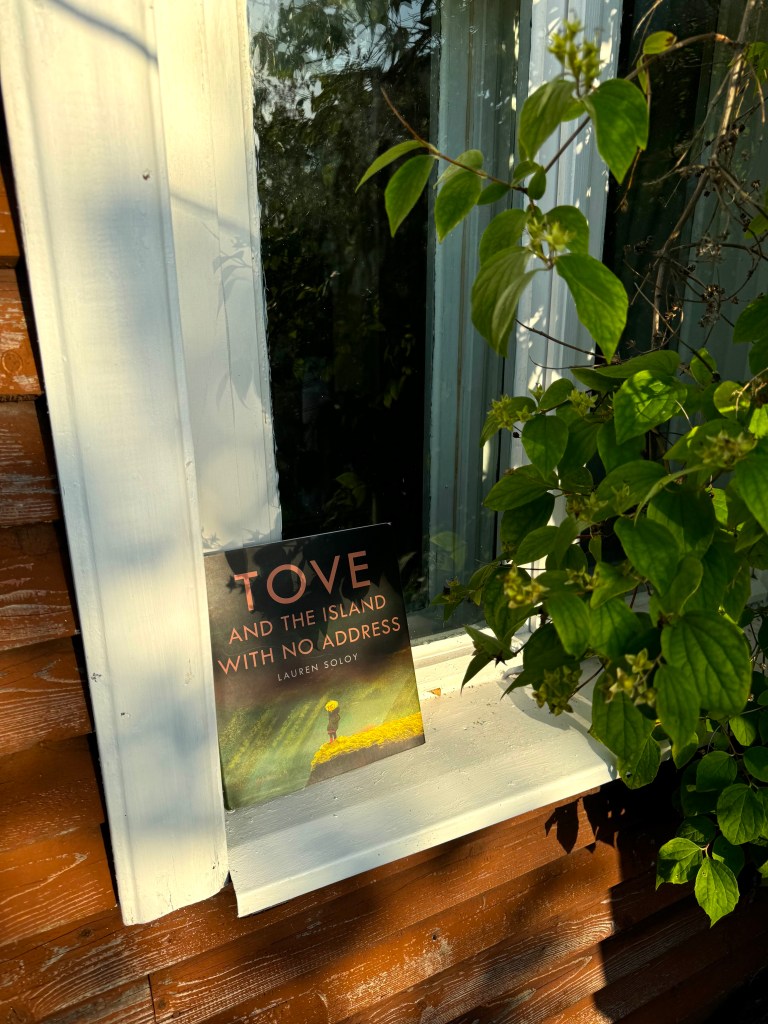
Lauren Soloy is the author and illustrator of When Emily was Small (Tundra Books, 2020) and Etty Darwin and the Four Pebble Problem (Tundra Books, 2021) and The Hidden World of Gnomes (Tundra Books, 2023) and the illustrator of I’s the B’y (Greystone Kids, 2022) and A Tulip in Winter, a Story About Folk Artist Maud Lewis (Greystone Kids, 2023). She has lived on both coasts of Canada, always within reach of the sea. She currently lives in a house that is exactly 100 years older than she is in rural Nova Scotia, the ancestral and unceded territory of the Mi’kmaq People. She shares her home with her librarian husband, two curious children, an ever-expanding collection of books, two hives of bees, and one cat. The Sea Library Magazine had a chance to interview her!

What does Tove Jansson represent to you?
To me, Tove really represents someone who found a way to live life on her own terms, and according to her own heart. She never lost that childhood awareness of dark and scary things, but she found a way to forge her own path through it all, humour intact. Something to aspire to, I think!
Tove famously stated: “If I could wish something good for someone, I would wish for them an island with no address.” How did the concept for your book “Tove and the Island with no Address” come to you and why was it significant for you to share this story?
My story is inspired by several of the stories in Tove’s autobiographical book, “The Sculptor’s Daughter”. The stories that fascinated me the most were the ones set on the island her family visited in the summers of her childhood. And her stories are full of storms!
At the same time, I was dealing with some health stuff of my own, and realizing how small and comfortable my life had become. I thought, if I needed the reminder that being comfortable is not the most important thing, probably other people did, too. And who better to inspire us in that, than Tove Jansson!
What were your main sources of inspiration while writing the story and creating illustrations?
When I was writing the story, I was inspired by the way that Tove played with the facts when writing her own childhood autobiography – she was more concerned with what FELT true in her own memories, even if they didn’t necessarily fit with the facts. And I think that’s an excellent way to approach writing or illustrating stories. It’s much more interesting to me when people make an illustration into an interpretation of reality, rather than a representation. We always choose what to emphasize. I wanted to emphasize what is true and magical about childhood, and life by the sea.

The illustrations in your book are filled with hidden creatures, such as pebbles with faces, moustached beings lurking in water and, of course, Tove’s secret friend living in a grotto on the island. Can you tell us more about this character? How did you choose to bring exactly him and his five daughters, “as tiny as shells with hair as wild as seagrass”, to life?
There’s a brief mention in one of Tove’s stories about a friend that lives in a grotto, and I instantly wanted to know more about this character. I thought of any sea cave I had ever visited, and how they often feel full of presence. That feeling inspired much of the book – it seemed appropriate for there to be little presences everywhere on the island!

This book, for me, serves as a tribute to childhood summers spent in nature, doing “dangerous things, boring things, digging things, exploring things”. What was your own childhood like?
I’m so glad to hear that! A lot of my childhood was spent being bored indoors – haha! But, one week a year, my Mom and I would rent a cabin on the ocean, and I would spend the entire week outside on the beach, getting into anything and everything. How wonderful!
I appreciate the delightful contrast in your book between adventures outside of one’s comfort zone and the warm, cosy safety of home to which one can return. What does bravery mean to you personally?
Thank you! I thought of the idea of having an adventure in a storm, and how much better it is if you know there is something warm and cozy waiting for you at the end of it. In a way, I think bravery is putting yourself outside of your comfort zone – again, saying that your personal comfort is not the most important thing. But also, in an ideal world, everyone would have somewhere safe and comforting to return to, when they need it.
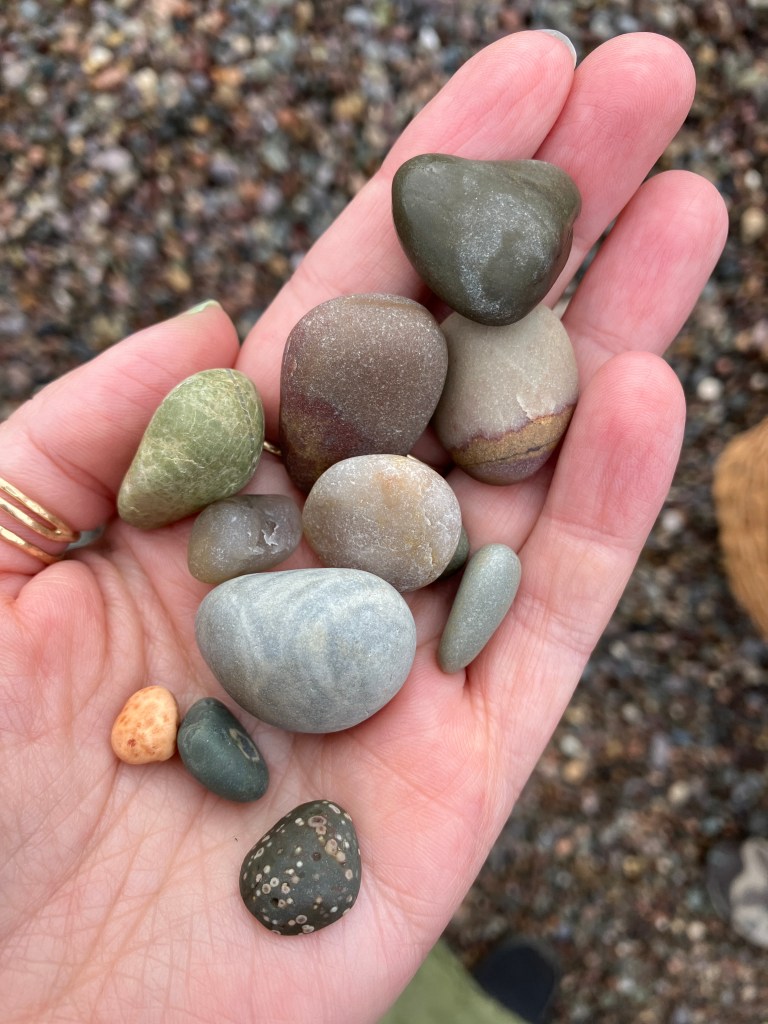
In her adventure, little Tove loses something in the sea and imagines that someone else will eventually find it. What is the most unusual or fascinating item you have discovered on the beach?
Isn’t salvage such an interesting idea?
My house is full of treasures from the ocean – special rocks, sand dollars and starfish, broken bits of pottery that have been rubbed smooth, interesting bits of wood – I love it all! But maybe the most interesting thing was when my kids found a message in a bottle washed up in the sand!
What book would you recommend for the Sea Library?
I would recommend the picture book, “Town in By the Sea”. It was written by Joanne Schwartz and illustrated by fellow Nova Scotian, Sydney Smith. It really captures the area of Cape Breton, Nova Scotia, where the story is set, in such a beautiful way.
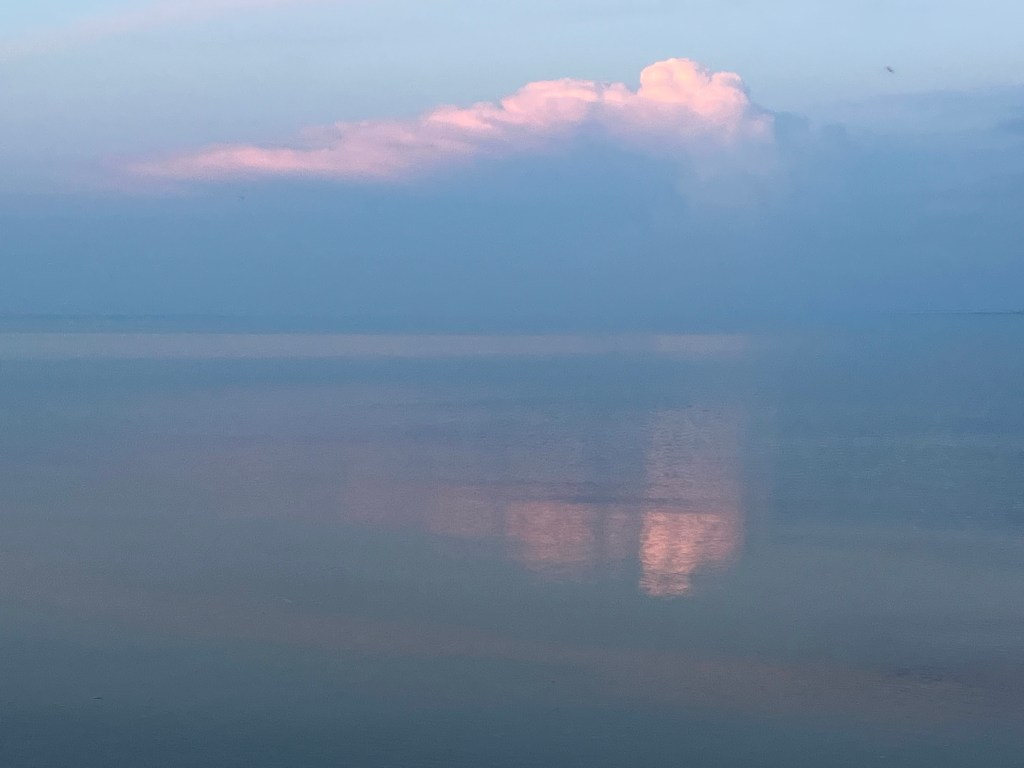
What does the sea mean to you?
I have lived near the ocean my entire life. When my husband and I were looking at moving from our home on the west coast of Canada, the only rule I set was that I needed to be able to get to the ocean! I love everything about it – the smells, the sounds, the sights – the feeling of smooth stones or sand beneath my feet. In less than ten minutes from my house, I can be on the most amazing beach full of rocks of every colour. Nova Scotia, where we ended up, has some truly amazing beaches, and you often have them entirely to yourself. As the saying goes, the ocean “is the cure for everything.”
Thank you!
Soloy, Lauren. Tove and the Island with no Address. Tundra, 2024


 Sea Library
Leave a reply to Winding Up the Week #395 – Book Jotter Cancel reply